I still remember the first time I felt it—that tiny spike of stress when an app asks you to “pick a tribe.”
Not because I don’t know myself. Not because I’m ashamed. But because the options can feel like a trap disguised as a shortcut.
One minute you’re trying to flirt. The next, you’re in a weird identity dressing room holding up two outfits that don’t fit: Otter or Jock. And you’re thinking: “Okay, but what if I’m neither? What if I’m both depending on the week? What if I’m just… me?”
Then it gets heavier, because choosing isn’t neutral.
Checking a box can feel like a political statement. Like you’re endorsing a hierarchy you didn’t invent. Like you’re telling people what you deserve—or what you’ll tolerate—before anyone even learns how you laugh, what you nerd out about, or what chemistry feels like in your body.
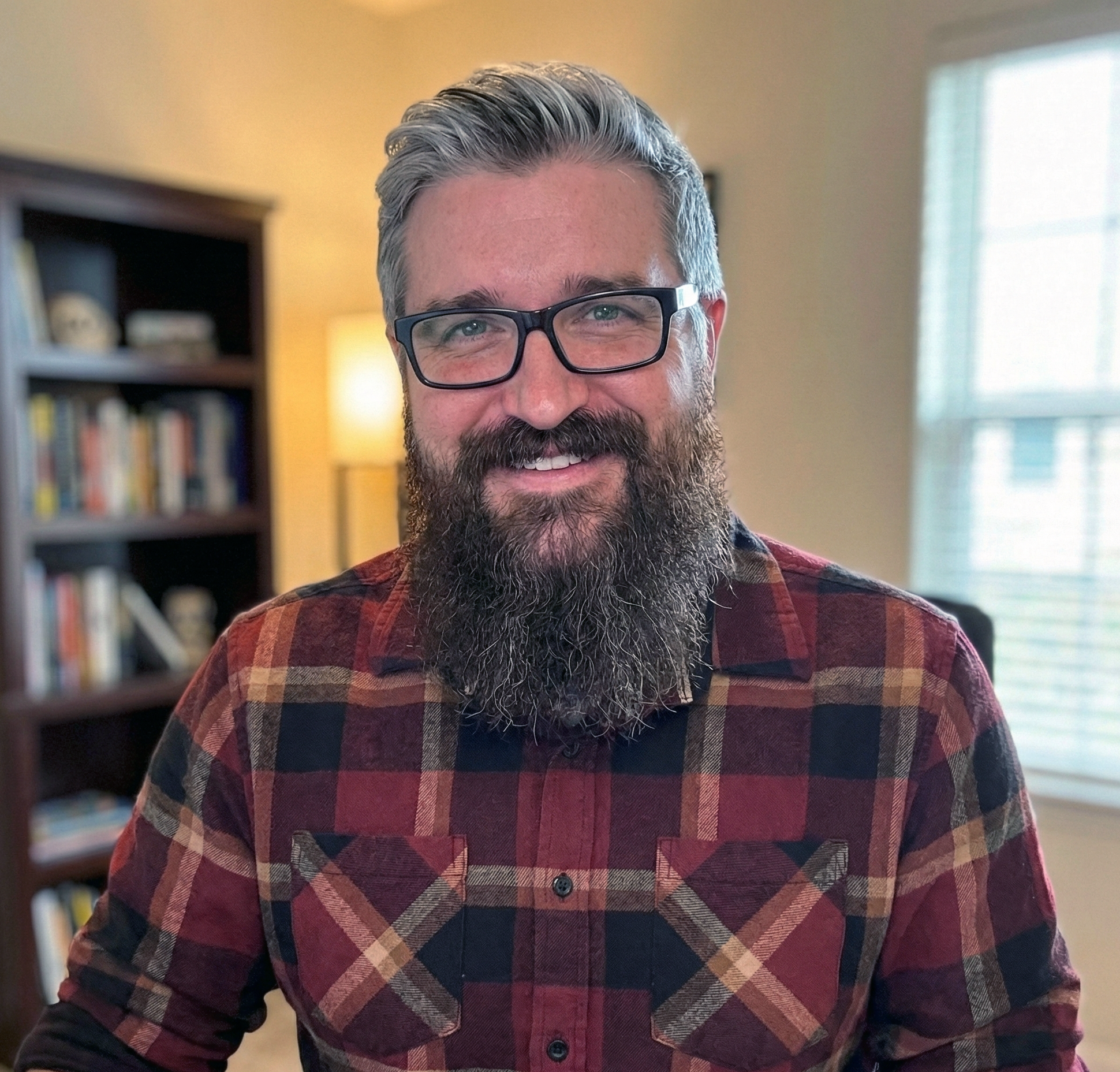
As the founder and CEO of Splashd, I talk to queer people every day who are exhausted by this. Labels once helped us find each other. But in 2025, they can also become restrictive cages.
Let’s talk about the end of “types”—and what we can build in their place: dating by energy, compatibility, and real human nuance.
How tribes helped us survive (and why they don’t always help now)
It’s important to say this clearly: queer “tribes” and subcultures weren’t invented to be shallow. They were invented to be legible.
When you’re marginalized, coded language becomes a lifeline. For decades—especially for gay and bi men—terms like bear, twink, leather, jock, femme, masc, daddy, boy, and countless local variations helped people find community, signal safety, and locate desire in a world that told us our desire was wrong.
And outside gay male spaces, queer communities have long used identity words to create belonging—lesbian butch/femme histories, ballroom houses, kink communities, trans and nonbinary micro-communities, chosen-family networks. These weren’t “aesthetic preferences.” They were survival technology.
But survival tools can become outdated when the environment changes.
In 2025, queer people are more visible—and also more surveilled, marketed to, and pressured to package ourselves into neat categories. What once helped us find each other can now narrow us into a brand.
The shift many of us are feeling isn’t “anti-label.” It’s anti-cage.
And that brings us to what researchers and daters have started calling label fatigue.
The data: label fatigue is real
“Label fatigue” is the exhaustion that comes from being repeatedly asked to define yourself—especially in ways that feel premature, overly simplistic, or optimized for other people’s expectations.
In 2025 reporting from Hinge in partnership with GLAAD on LGBTQ+ dating experiences, one finding keeps showing up in community conversations: nearly half of queer daters say they feel boxed in by labels. Another pattern shows up alongside it: around half of users report altering their presentation to fit a mold, often around masculinity, femininity, body expectations, or “what performs best.”
When dating becomes a performance, authenticity starts to feel risky.
A quick reality check about “the numbers”
These stats come from self-reported dating research (including 2025 Hinge/GLAAD reporting). Self-report isn’t perfect—but it matters, because it captures what people are actually feeling while swiping, chatting, ghosting, and trying again.
Here’s what I take from this as a builder (and as a queer person): the problem isn’t that people have preferences. The problem is that apps—and the culture inside them—often turn preferences into rules, and rules into rankings.
Why does checking a box feel like a political statement?
Because it often is.
- If you pick “masc,” you might be signaling safety from femmephobia—or participating in it.
- If you pick “femme,” you might worry people will stereotype your voice, your role, your interests, or your “validity.”
- If you pick a body label, you might be preemptively bracing for rejection—or for fetishization.
- If you refuse labels entirely, you might fear you’ll disappear in search filters.
That’s not “being dramatic.” That’s responding logically to a system that has real consequences.
Dating shouldn’t feel like writing a résumé for acceptance. It should feel like being met as a person—before you’re sorted as a category.
The Gen Z perspective: sexuality as a spectrum
Gen Z didn’t invent fluidity. But they’re far less willing to apologize for it.
A growing number of younger queer daters view sexuality and identity as contextual, evolving, and expansive—not because they can’t commit, but because their lived experience doesn’t fit a single checkbox (which also shows up in the broader shift toward sexual fluidity and straight-curious dating).
In the same 2025-era dating research conversations (including Hinge/GLAAD reporting), about 39% of Gen Z queer daters say they’re likely to reconsider the labels they use. That suggests identity isn’t “settled” at 18 or 21 or 25—it’s responsive to healing, safety, community, and self-understanding.
It also makes sense culturally: Gen Z has grown up with more language for nuance, more visibility (both supportive and hostile), more discourse, and more pressure to be “coherent” online. The paradox is that more language can create less freedom if it starts to feel like a test you can fail.
If any of that hits a nerve, you’re not alone. And you’re not “too sensitive.” You’re just paying attention.
The “masc” trap: when performance becomes a job
Let’s name the big one: the performance of masculinity.
This isn’t only a “gay men” issue—but it shows up sharply in men’s spaces because masculinity is treated like currency. You can spend it to buy safety, desirability, status, or just fewer rude messages.
In 2025 dating research conversations, about 50% of users say they’ve altered their presentation to fit a mold. In practice, that can look like downplaying softness, avoiding “femme” interests, choosing photos that read tougher, writing colder bios, or using “masc” as a shield before anyone has the chance to reject you.
Here’s the part we don’t say enough: this kind of performance can become a mental health issue.
When you repeatedly act out a version of yourself that you believe will be accepted, you teach your nervous system a brutal lesson: the real me is unsafe.
If you’ve ever edited yourself to be safer
That wasn’t vanity. That was adaptation. You deserved better than having to strategize your humanity for basic respect.
Masculinity isn’t the problem—scarcity is
Being masc isn’t wrong. Being femme isn’t wrong. Being neither—or being both—isn’t wrong.
The trap is scarcity thinking: the sense that only one presentation gets rewarded, and everyone else must adapt to survive the market.
That scarcity gets reinforced when profiles are built like static trading cards—height, weight, tribe, “masc/straight-acting,” top/bottom (sometimes before hello), and a list of “no’s.” Those fields can feel efficient, but they can also create a culture where you’re “sorted” before you’re seen.
And if you’re trans, nonbinary, gender-nonconforming, disabled, fat, or racialized in ways that people fetishize or exclude, the performance pressure multiplies.
Static profiles vs dynamic humans
A profile can’t capture a whole person—but it can signal what you value.
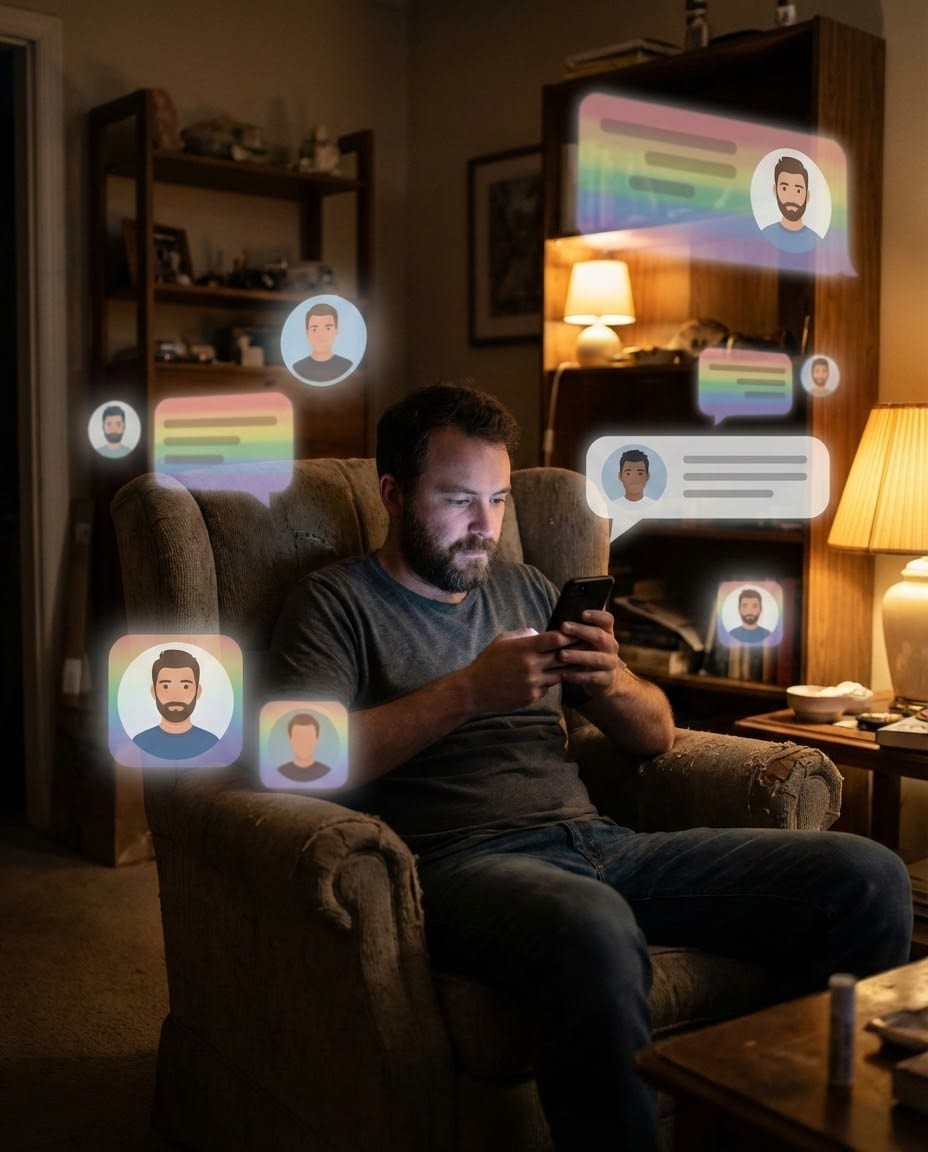
When apps over-emphasize static traits, we end up dating a spreadsheet—and it’s a fast track to feeling alone in a sea of profiles. But real attraction isn’t static. It’s dynamic: it lives in conversation, nervous-system safety, shared humor, how someone handles boundaries, whether you feel relaxed or hypervigilant, and the kind of confidence that doesn’t require cruelty. Sexual compatibility can be instant, but it can also develop with trust. Either way, it’s harder to predict from a single label than we like to pretend.
That’s what I mean by energy and chemistry. Not vague “good vibes only” avoidance—real, embodied compatibility.
A “dynamic human” check-in (that actually matters)
Instead of “What box do you fit?”, try “What experience do you create?”
Ask yourself, in plain language:
How do I want people to feel around me?
What kind of connection am I open to right now (chat, friends, dates, intimacy)?
What are my non-negotiable boundaries?
What do I genuinely enjoy—what are my real-life rhythms?
What’s my communication style when something feels tender, confusing, or real?
This is where dating becomes less like sorting and more like meeting.
Actionable advice: write a vibe-based bio (and try wildflowering)
If labels feel tight, you don’t have to replace them with nothing. You can replace them with signal—language that helps the right people recognize you, without forcing you into a category you’ll resent later.
A vibe-based bio works best when it does three things at once: it clarifies what you’re open to, gives easy conversation hooks, and sets the tone for respect.
How to write a vibe-based bio (without sounding like a brand)
One simple approach is: an anchor line (energy), a world line (your real life), and a looking-for line (intentions).
Anchor: Soft heart, sharp humor. Big on consent and clear communication.
World: Gym sometimes / bookstore always / Sunday morning coffee person.
Looking for: Open to dates, open-minded about “types,” into chemistry and confidence.
If you want a template you can copy-paste and answer quickly:
I’m happiest when:
My green flags:
I connect through:
Currently craving:
Boundary I respect (and want respected):
Now, a small set of tips you can actually use today:
- Name your energy, not your category. “Warm, playful, direct” often tells someone more than “otter.”
- Write in invitations, not exclusions. Lead with what you want; it sets a better tone than a wall of “no.”
- Keep one detail specific. Specificity is a magnet; generic bios disappear.
- Make room for change. “Exploring what fits” can be more honest than “I am X forever.”
Wildflowering: letting identity grow slowly
I love the idea of wildflowering: letting identity unfold at its own pace, without forcing it into a pot that’s too small.
In practice, this can be as simple as using “right now” language (“Right now I’m into…”), keeping a couple must-haves for nervous-system safety while letting the rest stay flexible, and choosing curiosity over certainty (“I’m curious about…”). You’re not being vague—you’re being truthful about a living, changing self.
Date outside your type (without losing your boundaries)
“Date outside your type” can sound like a lecture—like you’re being told your preferences are wrong. That’s not what I mean.
Preferences are real. Trauma is real. Safety is real. Cultural context is real.
But types can calcify. They can become autopilot. And autopilot can make you miss a connection that doesn’t look familiar at first glance.
In 2025 dating research conversations, about 45% of queer daters say they’re curious to date outside their type. Curiosity is a meaningful signal: people want to be surprised again.
Here’s a structured way to experiment without forcing attraction or abandoning boundaries.
A boundary-friendly reframe
Dating outside your type doesn’t mean dating outside your values. It means letting attraction be a conversation, not a filter.
Why Splashd is built for fluid identity
At Splashd, we’re not here to scold anyone for having a type. We’re here to create a space where your type doesn’t become a prison—for you or anyone else.
That means building for the dynamic human, not the static profile. In practice, that looks like encouraging bios and prompts that highlight personality, intentions, and vibe (not just measurements); supporting connection styles that aren’t one-size-fits-all (friends, dates, community, and everything in between); making room for fluidity without punishing people for “changing their mind”; and prioritizing safety, because fluidity requires trust—and trust requires protection.
As a founder, I’m committed to this: we can build tech that doesn’t reduce queer life into tidy boxes. We can build platforms that make room for nuance—and still make it easy to meet.
Because you shouldn’t have to flatten yourself to be findable.
Conclusion: delete the label, keep the honesty
Tribes, types, and labels had a purpose. They helped people find each other when the world made us hide. That history deserves respect.
But in 2025, many of us are waking up to a new truth:
The label isn’t your problem. The cage is.
If you’re tired of being asked to summarize your desire in a single word; if you’re exhausted from performing masculinity; if profile building feels like writing a manifesto—you’re not failing at dating. You’re reacting to a system that’s overdue for an update.
So here’s my invitation—simple, brave, and practical: date by energy. Write by vibe. Choose honesty over optimization. Try one conversation outside your type. Let yourself wildflower. Keep your boundaries. Keep your softness. Keep your complexity.
And if you want a platform that’s building toward that future with you, come find us on Splashd. Let’s make dating feel human again.